01 • ARCHITECTURE
San Fernando’s Multifamily Complex
A former juvenile rehab facility turned into an accessible, multi-purpose urban center focused on social housing.
Overview
San Fernando’s Avenue is located within Tlalpan’s Historical Centre, one of the oldest catalogued quarters dating back to the 17th century, when the Spaniards urbanized and developed a new administrative center following the European Colonialism influence. Tlalpan’s Center has gained special attention over time due to its vast historical and cultural background, regulating most of its neighbourhood expansion with strict urban, patrimonial-related laws. San Fernando’s re-urbanization square is situated on a 35,000 sqm piece of land also known as San Fernando’s Juvenile Rehabilitation Center, which currently represents a relevant point of conflict in the city.
The Juvenile Rehabilitation Center that was once built in the outskirts of the city, lays now in the center of San Fernando’s Avenue, surrounded thousands of buildings. An urban intervention is urgently needed to solve the existing problems in the area.
Challenges
Evaluate what type of urban and landscape intervention is most suitable, given the ever- growing need for housing, formal commerce, and public space that is currently absent in San Fernando and Toriello Guerra’s quarters.
Objectives
1. Scan and identify the site's most problematic areas affecting urban development and day-to-day dynamics 2. Rethink the existing use of public space with a urban intervention inside the current Juvenile Center 3. Develop one of the new proposed buildings with architectural precision through the use of blueprints 4. Explore spatiality and social relations as a consequence of the urban intervention
Approach
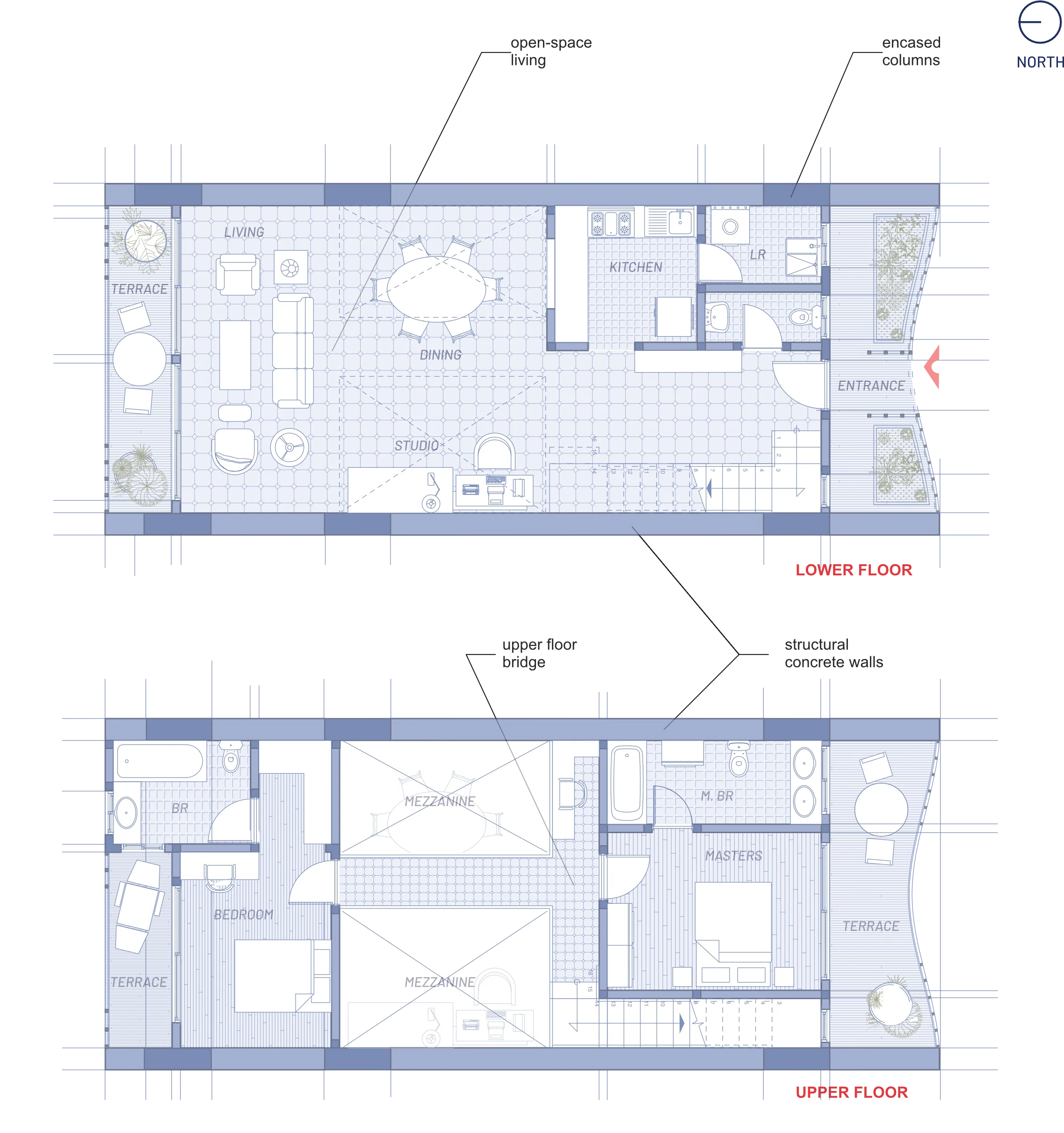
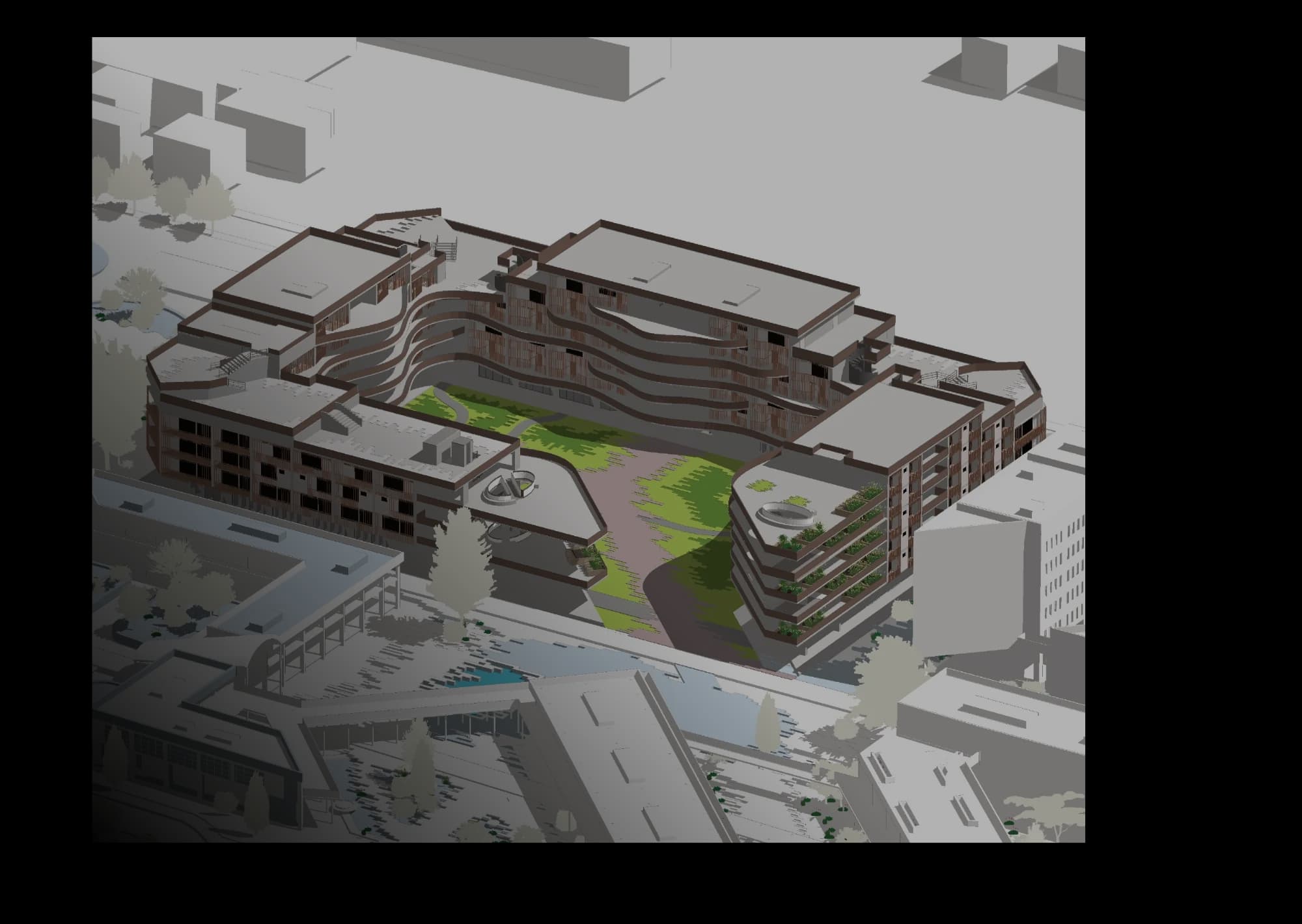
A Multifamily Complex consisting of four different apartment typologies and common areas, local commerces facing San Fernando’s Avenue, cultural and sport facilities, as well as a conscious adaptation of the existing public park into the square.
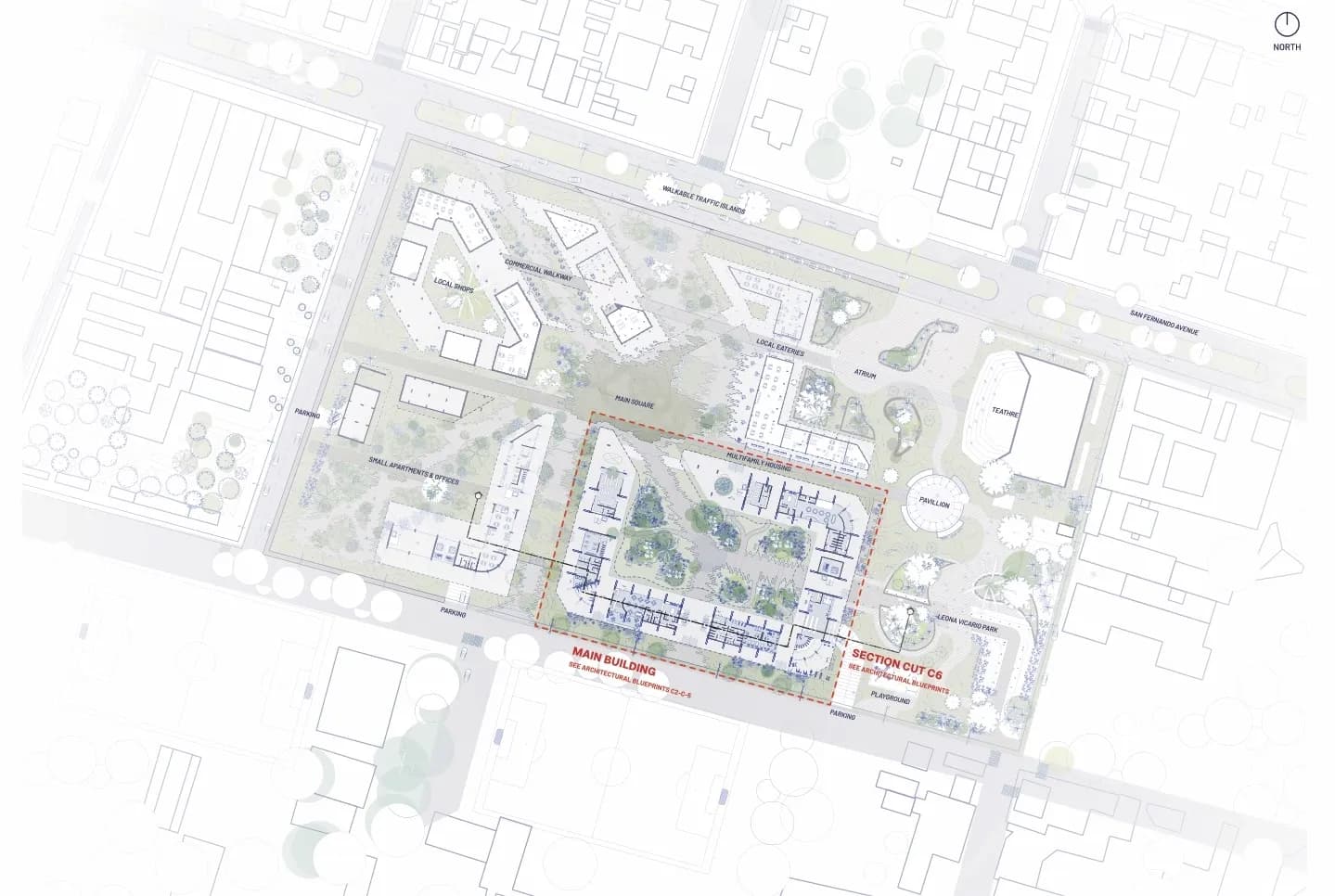

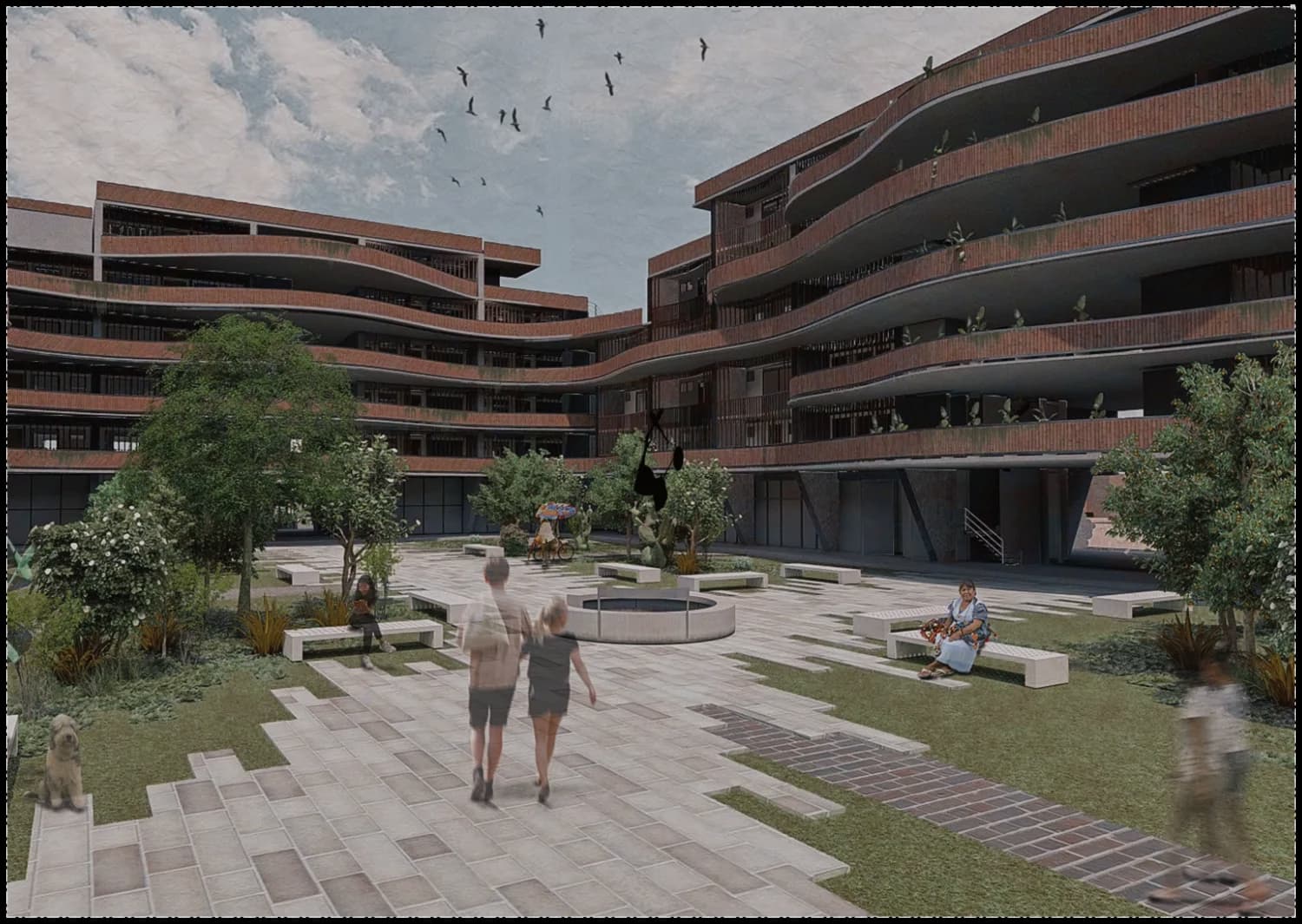
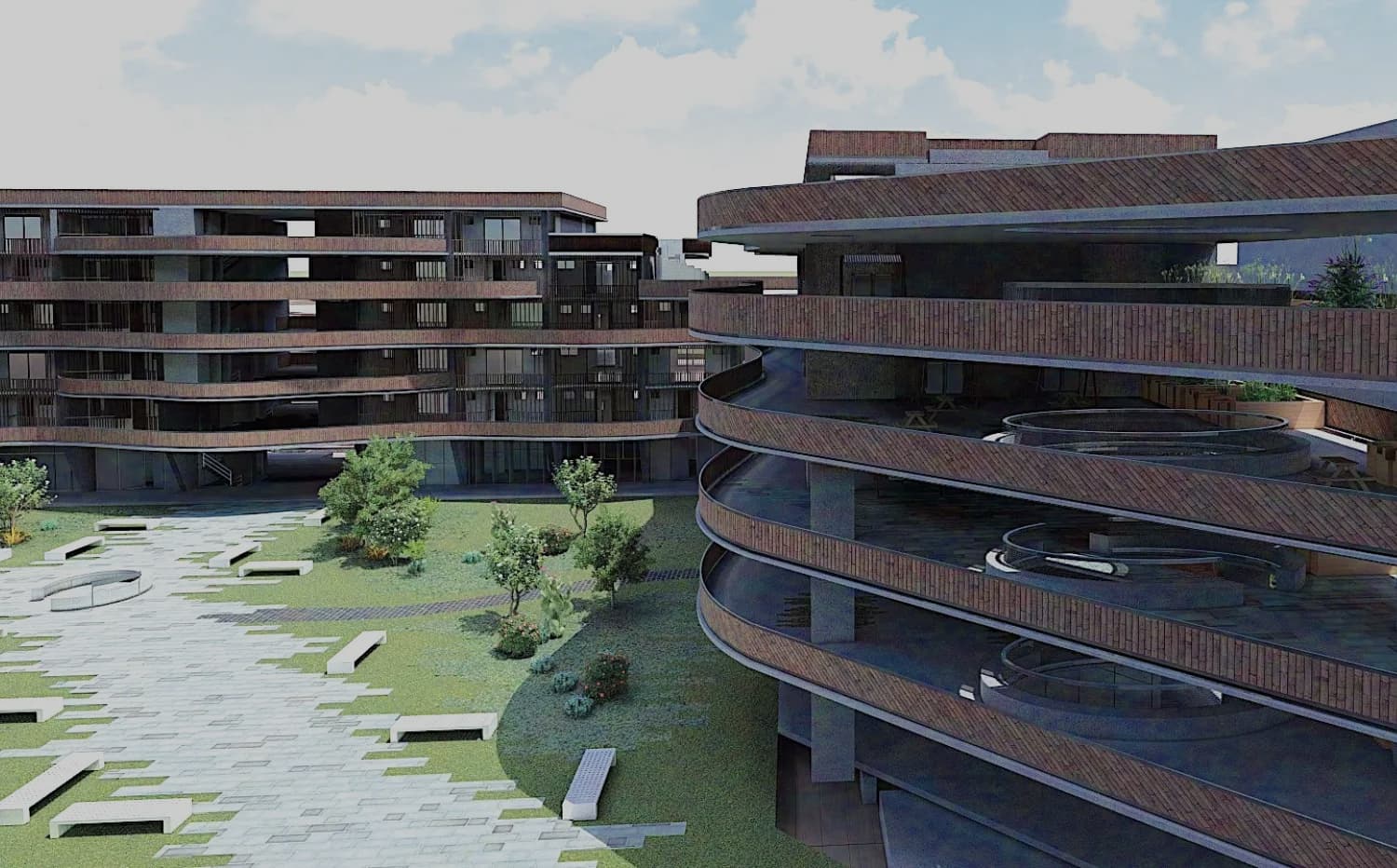
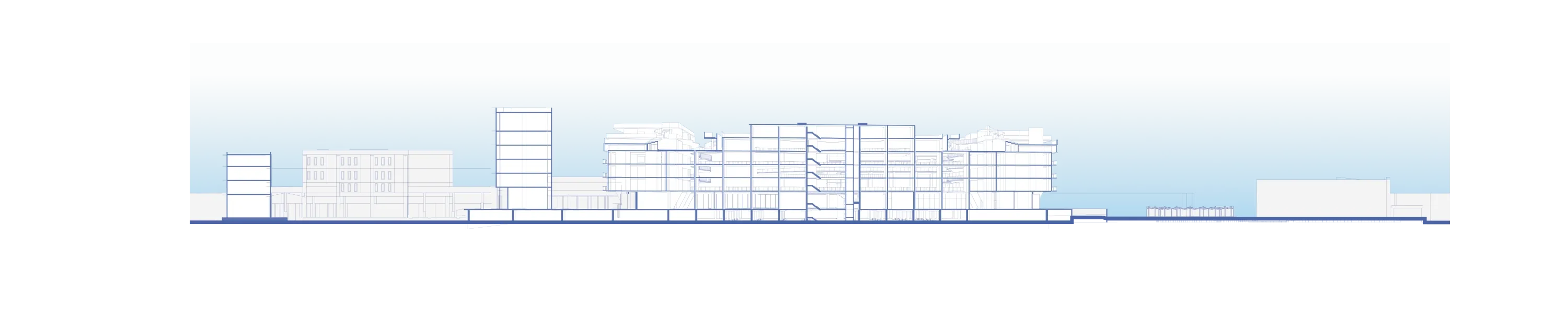
The 7-story building acts as the main reference point within the entire complex, connecting the city block in all directions. Pedestrians are allowed to walk freely through the cloister.
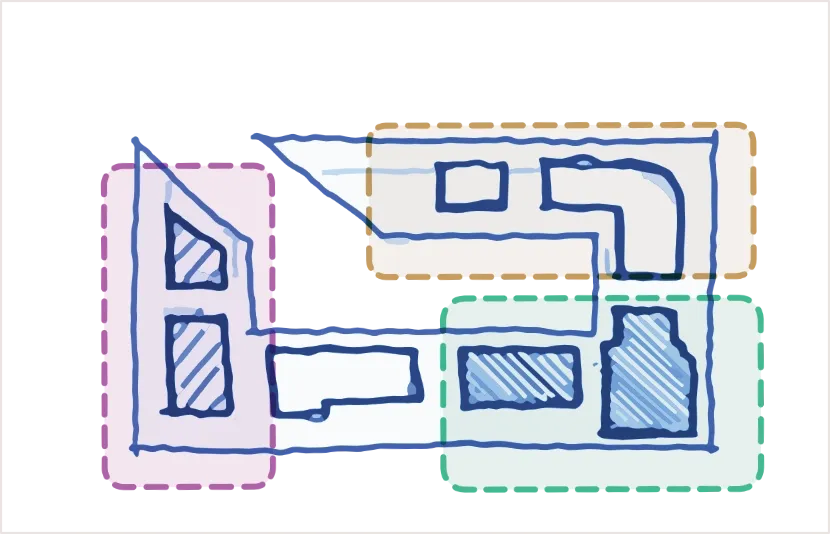
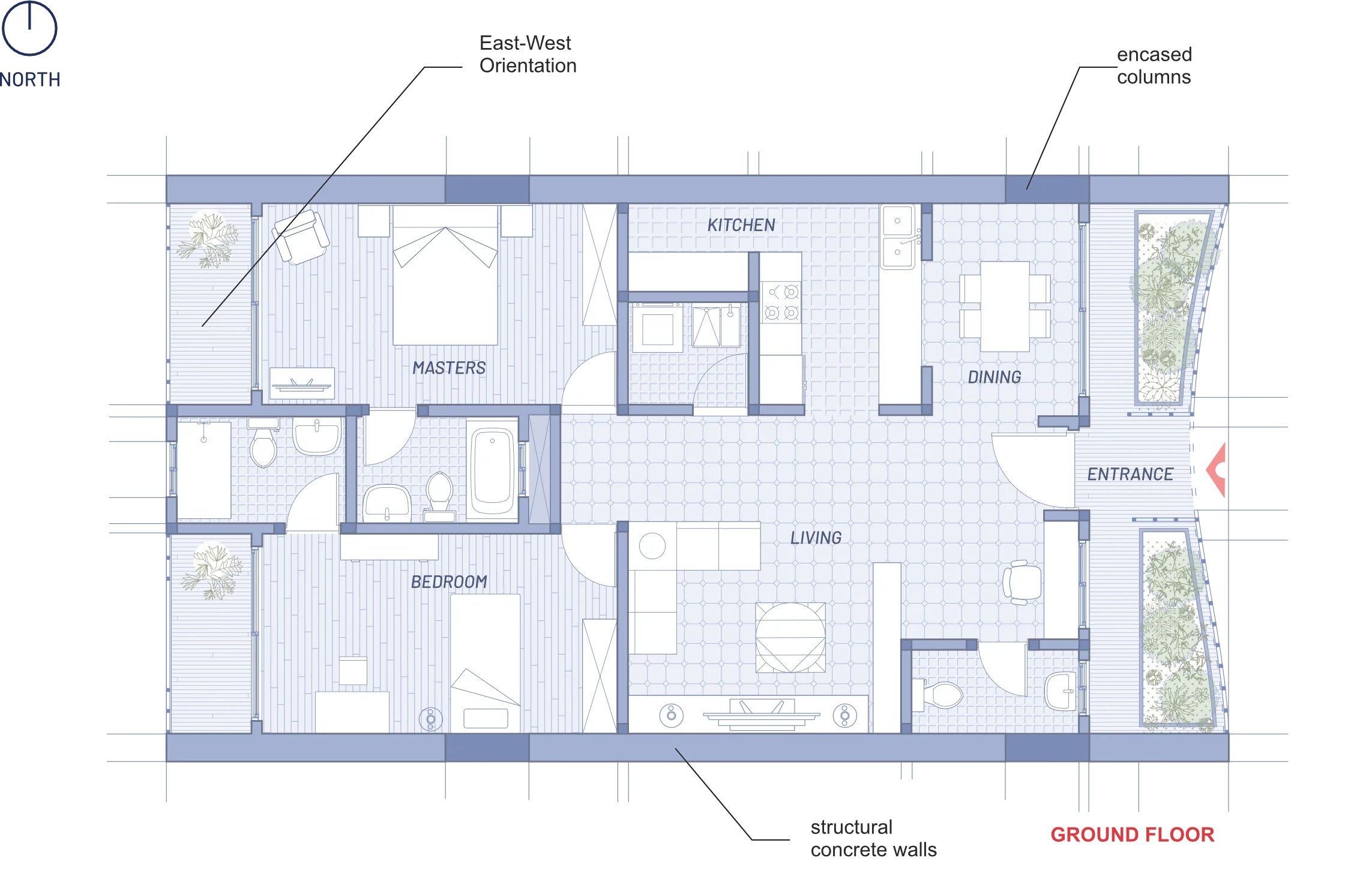
The ground floor plan was conceived based on the site’s immediate context: commerce to the North, cultural zone to the East, services to the South, and social housing to the West.
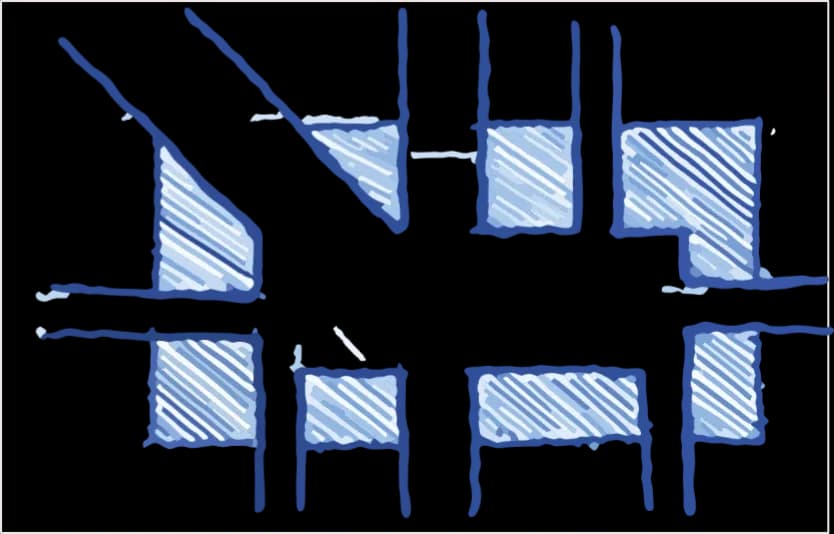
There are over ten walkable entrances from the outside to the inside of the complex. Each entrance has its own visuals to surrounding buildings.
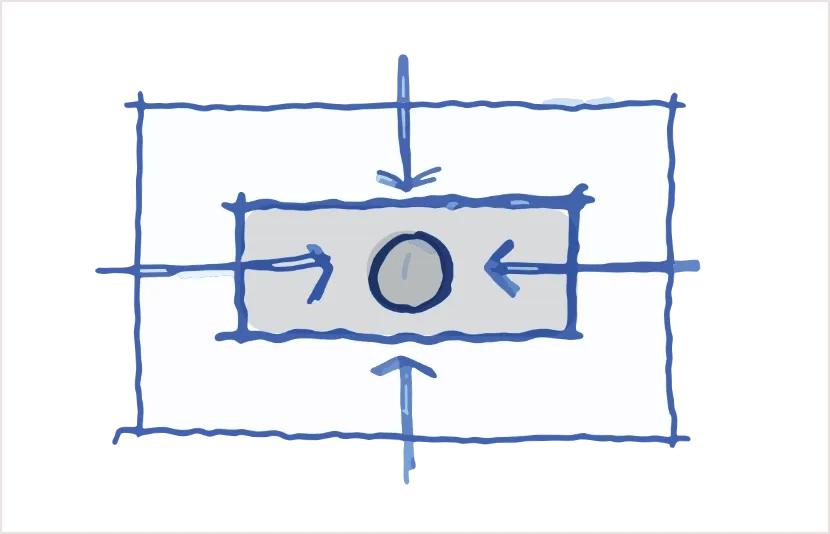
The U-shaped building creates a unique gathering point for the residents. Events held here also interact with the theatre, the commercial corridor, and the park.
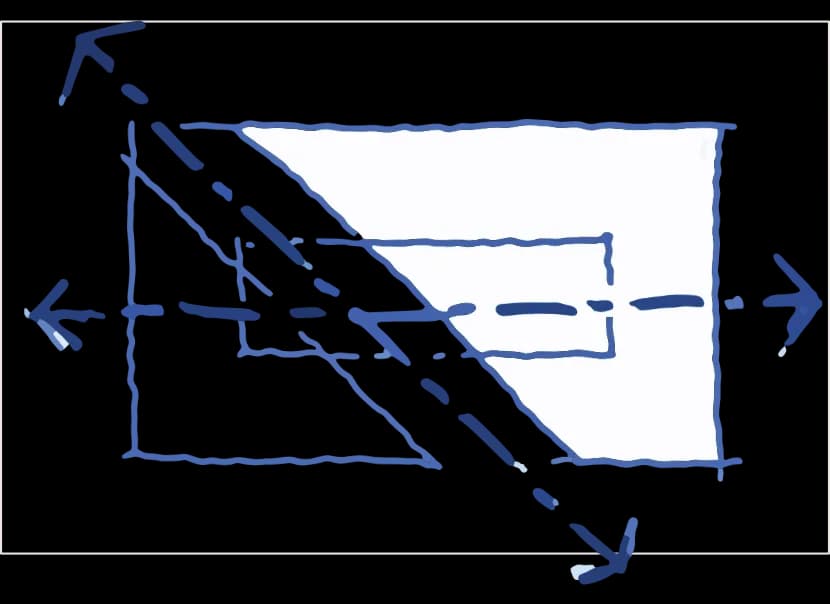
The cloister connects the Main Square with the park and the adjacent appartment building through strategically-placed axes that make the walking experience more satisfying.
Floor Plans
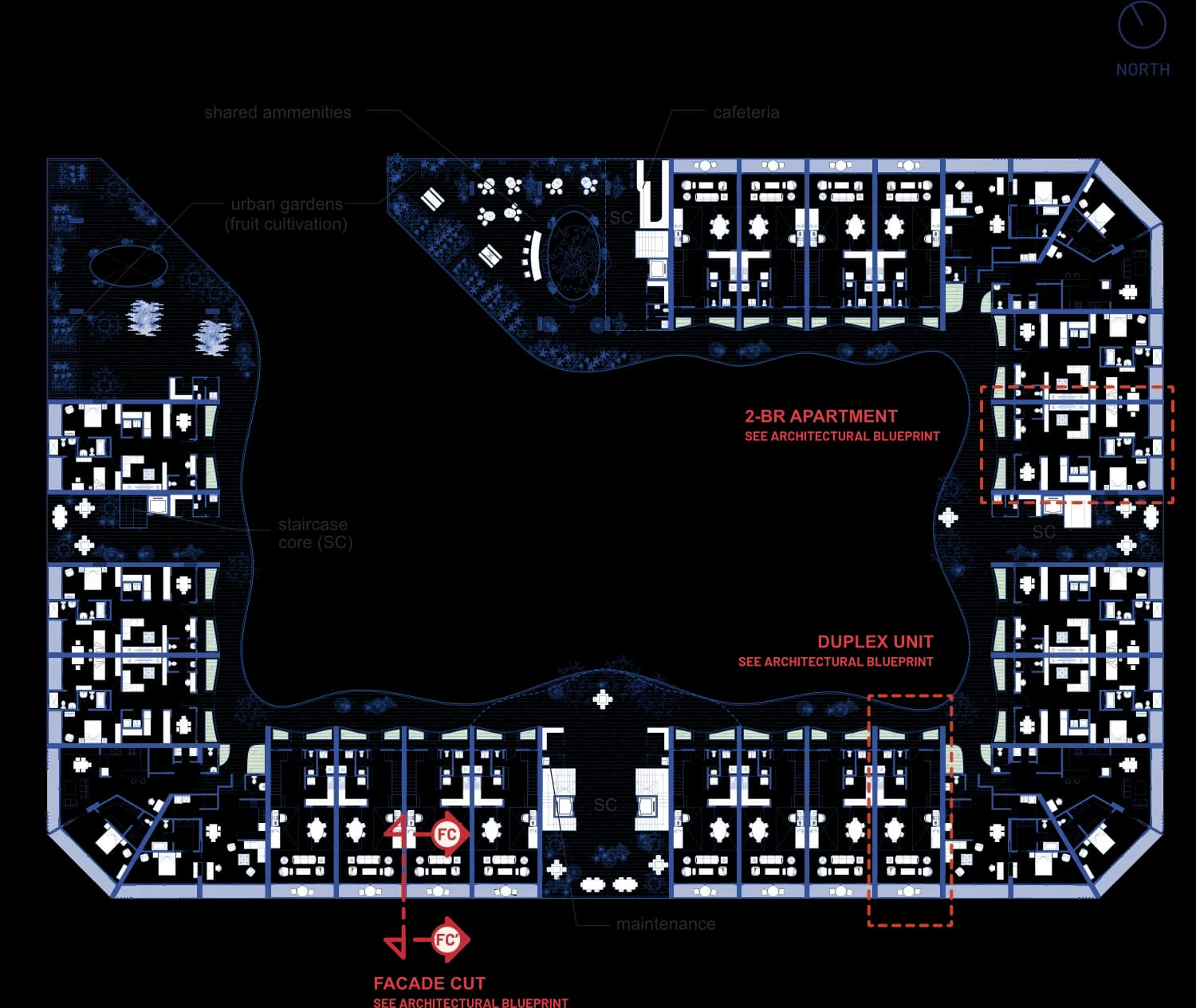
Section Cuts
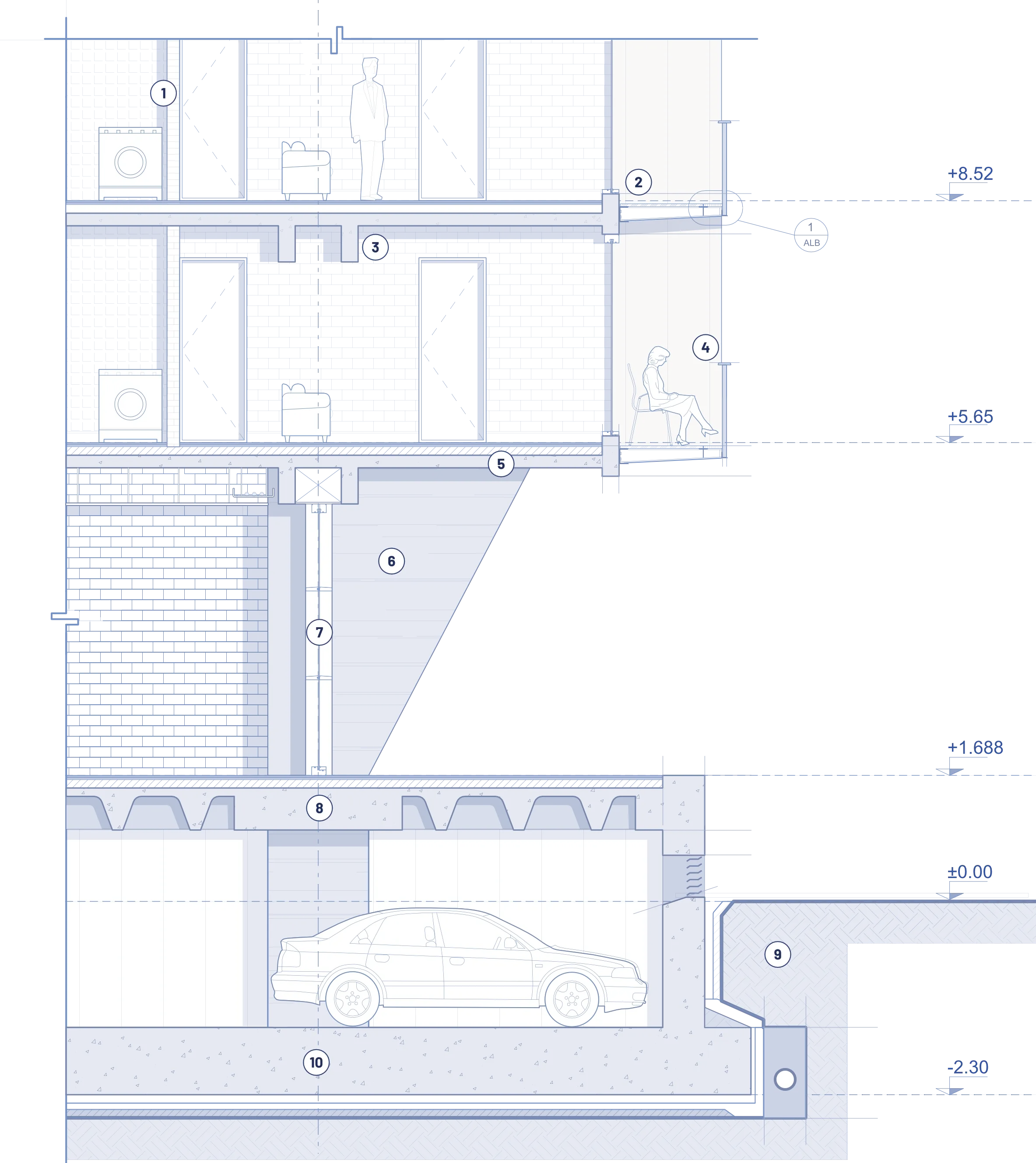
Facade Cuts
Results
A positive urban impact originated by integrating the former Juvenile Center within the surrounding neighbourhood, a 25% increase in formal commerce and reduced crime within the area.
Learnings
• A better understanding of urban and architectural interaction within a confined, yet generous building lot • Designing an apartment complex requires insight on people dynamics and a solid understanding of the user flows and desires • How to modulate an apartment complex based on architectural axes defined by the building's parking basement • People's perception of public space and natural site appropriation can be highly influenced with materialized stimuli
Next steps
• Assess the project's feasibility 6 years after the original proposal was delivered (2020 vs 2026) and adapt the complex designs accordingly • Evaluate how the final proposal is currently perceived by the quarter's residents and merchants • Extend the multifamily designing process with construction documents
Gallery
1 / 9
Image 1 of 9. cover.webp